Puppy Separation Anxiety
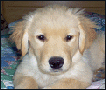
Separation anxiety in a puppy is many times erroneosly labeled by the owner as "misbehavior". Many puppies experience separation anxiety when left alone. They will often whine, bark, cry, howl, chew, dig, scratch at the door, soil the house or destroy your home and yard. We often unintentionally train our puppies to behave this way because whenever they throw this kind of tantrum when we leave, we quickly come back to reassure them, give them attention or even a bone or biscuit. If you do this, your puppy will soon learn that he can control you with emotional blackmail.
Long, drawn-out farewells can create separation anxiety problems by first exciting your puppy and then making the isolation more obvious when you're gone. Just when he gets all worked up and ready to play, suddenly you disappear. With all this energy, your puppy will either try his best to get you to come back or he will have to vent his energy in some other way. Since he can't build model airplanes or invite his buddies over for a hand of poker, he does doggy things - like chew, dig and bark.
Perhaps it is not separation anxiety after all! We often think our puppy is destructive because he is angry and spiteful that we left him, but he could actually be just trying to have some fun since there is nothing else to do. He may be relieved to be able to do those things he normally can't do when you're home. He may be thinking, "Thank goodness the owner is finally leaving! Now I can chase the cat, dig up the tomatoes, get in the trash, and bark at the neighbors. They never let me do those things when they're home."
Some puppies with separation anxiety are stressed, nervous and insecure when they are left alone. They express this nervous energy in typical dog fashion - chewing, digging, howling, barking, whining and house soiling.
To prevent separation anxiety, dogs need to feel happy, secure, and comfortable when you're away. It's important to give them things to do while you're gone. Provide them with lots of toys, such as a kong or hav-a-ball stuffed with treats, or a digging pit in the yard. Often another companion pet can help alleviate the boredom.
Another way to prevent separation anxiety is to set aside scheduled time periods to give your dog undivided attention, play and exercise. A happy, well-exercised puppy will usually sleep contentedly during the day while you are gone. Be sure that one of the scheduled play sessions occurs before you must leave for the day. Give your puppy a chance to settle down before you leave and don't make a big deal of your departure - just leave without any emotion or commotion.
If your puppy is already experiencing separation anxiety, then gradually accustom him to your leaving. Practice leaving and returning several times a day until he gets used to your departures and realizes that you are not abandoning him forever. Gradually leave for longer and longer periods of time, but start out by leaving for just 5 minutes and returning again.
Puppy Separation Anxiety
Recommend this webpage... share with friends !These articles may also be of interest...
^ Top of Page