Puppy Pulling On Leash
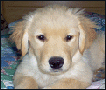
Pulling on leash is a very natural thing for a pup to do. They feel the restraint so they start pulling against it. Let's start the puppy leash training indoors with no distractions. Accustom the puppy to walking on a loose leash at your side. It's important that you teach your puppy to walk on one side only. The standard is your left hand side. It really doesn't matter which side, but choose only one and stick with it - this way your puppy won't be tripping you up by changing sides.
Puppy Leash Training Do's
Use a body harness and train your puppy to accept it the same way you teach puppy to accept a collar. If your pup is frightened or leery of the collar/harness or leash, read our article on teaching your puppy to accept his collar or leash.
Use lures and praise to keep puppy at your side.
Keep the leash loose at all times. If you see your puppy starting to forge ahead, abruptly reverse directions so that puppy finds himself suddenly behind or beside you instead of forging in front of you. Don't wait until the puppy is clear at the other end of the leash, pulling ahead before you take action. The leash should always remain loose except for that one split second it takes when you're reversing direction. Do not drag your puppy back to your side. Use a quick tug, then immediately release so the leash is slack again. If it doesn't all happen in 3/10ths of a second, it's taking too long and your puppy will not learn to walk nicely on leash. Put another way: Instead of correcting your dog after he is already pulling, do not give him the opportunity to pull. If he never pulls, he will never learn to pull. You must correct him BEFORE he pulls!
Practice now before your pup learns to pull. Since your pup is unable to walk the streets yet, begin teaching him to walk around your house and yard. He should be taught not to pull before hitting the streets.
Puppy Leash Training Don'ts
If you cannot correct the puppy in time, do not reward his pulling by letting him continue on his way. Do not let your puppy pull you around. Better to slowly just turn around and go the other way, or stop in your tracks and say, "We are not going one inch further until you stop pulling." Then wait, it may take 30 seconds; it may take 20 minutes. Do not move until your puppy is in control. Now you can start over and give the correction before he starts pulling again. If again you are too late in your correction, start again.
Do not yank and pull on your puppy's throat and neck. Use a soft, adjustable, non-restrictive harness. As soon as your pup learns leash manners, you can switch to a regular collar for walking. Do not leave the harness on your dog unattended. Use it only while you are practicing.
Never use a choke collar on a puppy.
Puppy Pulling On Leash
Recommend this webpage... share with friends !These articles may also be of interest...

^ Top of Page