Dog and Puppy Biting Behavior
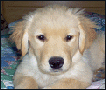
Biting is most common in young puppies and new dogs
Especially in play and while teething. It's up to you to teach your puppy or dog what is acceptable and what is not. Most dogs and puppies are generally loving, sweet, adorable, affectionate and wonderful 99% of the time. Only 1% of the time does something specific happen that makes the dog bite. There are many causes of biting and here's what you can do to prevent your puppy or dog from biting.
Dogs and Puppies Must Learn to Inhibit Biting
First of all, a puppy must learn to inhibit their bite before they are 4 months old. Normally, they would learn this from their mother, their littermates and other members of the pack. But, because we take them away from this environment before this learning is completed, we must take over the training for biting.
Socialization Helps Prevent Biting
By allowing your puppy to socialize with other puppies and socialized dogs they can pick up where they left off. Puppies need to roll, tumble and play with each other. When they play, they bite each other everywhere and anywhere. This is where they learn to inhibit their biting. This is where they learn to control themselves.
If they are too rough or rambunctious, they will find out because of how the other dogs and puppies react and interact with them. This is something that happens naturally and it is something we cannot accomplish. It can only be learned from trial and error. There is nothing you can say or do to educate them in this realm. They must learn from their own experience with another dog or puppy.
Another major advantage of dog to dog socialization besides the fact that it will help your dog to grow up not being fearful of other dogs is that they can vent their energy in an acceptable manner. Puppies that have other puppies to play with do not need to treat you like littermates. So the amount of play biting on you and your family should dramatically decrease. A puppy that does not play with another puppy or dog is generally much more hyperactive and destructive in the home as well.
Lack of Socialization Causes Biting
A major cause of biting is lack of socialization. Lack of socialization often results in fearful or aggressive behavior. The two major reactions a dog has to something it is afraid of are to avoid it or to act aggressive in an attempt to make it go away. This is the most common cause of children being bitten. Dogs that are not socialized with children often end up biting them.
The optimum time to socialize is before the dog reaches 4 months. With large breed dogs, 4 months may be too late, simply because at this age the puppy may already be too large for most mothers of young children to feel comfortable around. For most owners, the larger the dog is, the more difficult it is to control, especially around children. If there is anything you do not want your dog to be afraid of or aggressive towards, you must begin to socialize your puppy with them before 4 months of age.
Trust and Respect Inhibits Biting
There are many other reasons your puppy will bite and you will have to take an active role in teaching them about biting. However, before you can teach your puppy anything, there are two prerequisites that are essential. They are trust and respect. If your puppy doesn't trust you, there is no reason why he should respect you. If your dog does not respect you, your relationship will be like two 5 year olds bossing each other around. If your puppy does not trust and respect you, then when you attempt to teach your puppy something, he will regard you as if he were thinking, "Who do you think you are to tell me what to do?"
Use of Reprimands and Biting
Never hit, kick or slap your puppy. This is the quickest way to erode the puppy's trust in you. Yes, he will still love you. Even abused dogs love their owners. A unique characteristic of dogs is their unconditional love. You don't have to do anything to acquire your dog's love. But you must do a lot to gain your puppy's trust and respect. Another area where we destroy our dog's trust in us is when we scold or punish them for house training mistakes and accidents.
Summary Tips on Biting
1. Reprimand alone will never stop biting.
2. If no respect exists, the biting will get worse. If you act like a littermate, the puppy will treat you as one.
3. If trust is not there, the dog may eventually bite out of fear or lack of confidence.
4. Inconsistency sabotages training. If you let the puppy bite some of the time, then biting will never be completely eliminated.
5. Don't forget follow up. The puppy must understand that it is the biting that you don't like, not the puppy himself. Make up afterwards, to cultivate trust and confidence in the puppy.
Most owners wait until a bite just "happens to occur" before trying to deal with it and are therefore totally unprepared when it happens - and do all the wrong things, thus making the problem worse.
Dog and Puppy Biting Behavior
Recommend this webpage... share with friends !
^ Top of Page